The camera is a routine thing nowadays. But once upon a time, 30 years back a camera was one of the most precious possessions in our house. It was a Polaroid camera - the type that gives instant hard copy photoes.
We now have digital cameras that are much easy to operate, process and finally print; with the most advanced features and intuitive ease of use. Those days cameras were a rarity, and Polaroid cameras an extreme rarity.
In the modern world polaroid cameras are still used by the police, detectives and health personnel for its capacity to produce instant documentation, on paper of course, though very rarely, and based on unusual requirements.
Well this Polaroid camera, my father bought from an Anglo Indian who could ill afford to spend money on the film cartridges it required to be loaded for each shot, and the films were to be available no where in most parts of India those days.
One day I had a brainstorm and decided to request my uncle in Oman to send us a couple of film cartridges(each could be used for only one shoot), which he agreed to do so. However, out of the dozen he sent each time(which were imported all the way from the US), half of them invariably turned out to be damaged of mishandling by postal/ custom authorities.
So my father became an expert Polaroid cameraman and we had our childhood memories saved for eternity in insta-color(I just made up that word, excuse me). You took the snap, waited for a manual timer on the camera to run, and at the appropriate time pulled out the cartridge, separated the negative from the snap, wait for it to dry for a few minutes, and hey, pronto, you had the snap on paper ready to be put in an album. The negative contained lethal poison and had to be carefully disposed off.
I think the proliferation of cameras today has its advantages as well as its bad points. On one hand photography has been made so easy that we shoot anything and everything. Out of a 100 digital shots I guess only 30% of them are really worth preserving. On top of this the tediousness of separating the good ones from the bad ones forces us to preserve all of them, maybe write them on a CD, and forget them.
But when you took each photo in those good old days, every photograph mattered, and was taken with great care and diligence, and of course they were carefully preserved!
I know of a friend who took several thousand photoes at an event, but half of them turned out to be in bad light, but since he didn't have the patience to separate the good ones, he simply wrote it onto a CD which he finally disposed with the trash.
So now we have a battle between quantity versus quality, and quantity is winning, at the cost of quality.
The most wonderful thing about Polaroid snaps to us as kids was that it gave instant gratification. You pointed, carefully shot and the paper version was in you hands in about 3 minutes! It was nothing less than magic to us then!
When I learnt a bit of science in my later years, I appreciated the fact that Polaroid cameras used very complex technology using the physical phenomenon of light polarization and the chemical properties of light sensitive compounds.
Now that very camera lies unused, in a dusty corner of a cupboard (still under lock and key) since newer verions of Polaroid cameras have emerged, the films are available in India, but alas the film cartridges for our outdated camera is out of production. I had often nursed the dream of using that very camera when I grew up, but well, all good things must come to an end.
The cute photo you see by the side is that of my youngest bro(here) with a toothless grin, taken with the Polaroid camera when he was just around three.
Followers
Categories
- airport (1)
- arab lands (2)
- attempted hijack? (1)
- automation (1)
- autos (3)
- books (6)
- bribe (1)
- call centers (2)
- Chetan Bhagat (3)
- college days (6)
- conductors (2)
- corruption (2)
- drivers (4)
- drunks (2)
- enterprising salesman (2)
- environment (2)
- expatriate (3)
- Extraordinary day (3)
- fisherman (1)
- fog (1)
- food for thought (8)
- fun (2)
- Germany (2)
- good deed (1)
- goons (3)
- government offices (4)
- hobby (4)
- home (2)
- humor (4)
- in the news (8)
- inhumane (2)
- inner beauty (1)
- Inspiration (1)
- kejrival (1)
- Kochi (1)
- language (4)
- malayalee (4)
- nostalgia (10)
- On poetry (2)
- perseverance (1)
- police (6)
- politicians (1)
- popular malayalee joke (3)
- railway station (1)
- religion (2)
- reminiscences (2)
- road travel (4)
- satire (11)
- scientific studies (3)
- Shashi Tharoor (1)
- smoking (3)
- sycophancy (3)
- thief (1)
- train journey (1)
- work (1)
Blog Archive
-
►
2015
(4)
- ► October 2015 (1)
- ► March 2015 (2)
- ► January 2015 (1)
-
►
2014
(3)
- ► August 2014 (1)
- ► April 2014 (1)
-
►
2013
(2)
- ► September 2013 (1)
- ► August 2013 (1)
-
►
2012
(8)
- ► December 2012 (1)
- ► November 2012 (1)
- ► April 2012 (1)
- ► March 2012 (1)
- ► February 2012 (1)
- ► January 2012 (1)
-
►
2011
(8)
- ► December 2011 (1)
- ► August 2011 (1)
- ► April 2011 (1)
- ► March 2011 (2)
- ► February 2011 (1)
- ► January 2011 (1)
-
►
2010
(14)
- ► December 2010 (2)
- ► October 2010 (1)
- ► September 2010 (3)
- ► August 2010 (2)
- ► March 2010 (2)
- ► January 2010 (1)
-
►
2009
(19)
- ► December 2009 (2)
- ► October 2009 (1)
- ► September 2009 (2)
- ► August 2009 (3)
- ► April 2009 (1)
- ► March 2009 (2)
- ► February 2009 (1)
- ► January 2009 (3)
-
►
2008
(16)
- ► December 2008 (1)
- ► November 2008 (2)
- ► October 2008 (2)
- ► September 2008 (1)
- ► March 2008 (5)
My Blog List
-
7 years ago
-
9 years ago
-
11 years ago
-
12 years ago
-
13 years ago
-
15 years ago
-
16 years ago
-
My Travel Blogs
About Me
- CuppajavaMattiz
- Matty Jacob - Avid blogger with interests in technology, travelling and writing.
Popular Posts
- A Black Christmas For A Black
- Call Center Nights Tales
- The Scientific Disclaimer
- The Mallu Aunty and the Hyderabad Dudes
- Drab as the Desert
- Denial of Death and the Recurring Spiral
- The Joy Of 'R' and 'R' without the agony of the third 'R'
- Ulta Pulta Down South!
- Party Yuh Hi Chaalegi!
- Hilarious story of an inter-state marriage by Chetan Bhagat
Total Pageviews
The Rise and The Decline of the British Broadcasting Corporation
Recounted By CuppaJavaMattiz18 March, 2011
What did I have in common with Rajiv Gandhi, the day his mother Indira Gandhi was assasinated? Yes, both of us tuned to the BBC World Service Radio broadcast to catch the latest news on this ghastly incident, while All India Radio played it cool by playing classical music the entire day.
Those days Indians had limited exposure to the media and the BBC was often a gateway to unbiased truth and often wholesome entertainment.
This was perhaps why even now with the media explosion, when BBC announced the shutdown of its Hindi services there was a mass public outcry and the pullout was delayed for another year.(http://ibnlive.in.com/news/bbc-hindis-last-broadcast/146024-55.html)
I was a staunch fan of BBC World Service Radio broadcasts when I was a kid. I was often made fun of by my friends and their parents as the "radio kid" because of my habit of spending hours with one ear to the radio. While the newspapers highlighted domestic news and the certain events were often overlooked, I was enlightened on the war in Serbia, the fall of the Iron Curtain and the partisan war in Lebanon, the Israeli invasion of the Sinai peninsula, the Bhopal gas tragedy, and countless assasinations and rebellions.
I was for some time given the duty of collecting news that was to be read out at the school assembly by students who took turns to read it.
For this purpose, every day at BBC news bulletin time, I was glued to the radio set scribbling down the news headlines in a shorthand that I evolved and that only I could read.
My news extracts were for the most part of happenings far away from the realm of Indian interests and I doubt whether even a few of the students assembled actually grasped what was read out, not withstanding the fact that their parents hardly read even newspapers so busy they were with their daily jobs.
It was not just for the news that I tuned into the BBC. I was a regular listener of pop music programmes, dramatized versions of short stories and even quizzes, all on the air. Those days, the BBC correspondent in India was Mark Tully and he was a familiar voice on the news reportings. (Mark Tully eventually retired, has written a couple of books and has now settled down in India).
BBC had a special programme on Christmas where a popular writer read out excerpts of his own book for BBC listeners. Once such Christmas I was introduced to Frederick Forsyth's classic short story "The Shepherd".
I experimented with other radio channels too. But the Voice Of America was unashamedly biased to US interests and the anchors had an annoying yankee accent, Radio Moscow reeked of propaganda, AIR always began with "The Prime Minister today...", Radio Ceylon was just a golden oldies Hindi music channel, Germany's Radio Deutsche Welle had powerful radio transmitters that ensured a clear reception but lacked in content.
So it was the BBC for me. I owe a lot of my soft skills to that early on exposure to BBC newsreaders and anchors. While reading books taught me spelling and grammar, the pronounciation, the accent and most importantly the tone in context to the subject was a result of BBC's tutoring.
Labels: hobby, in the news, reminiscences
The days I was in middle school, in a remote part of Maharashtra, where a gigantic Cement Factory had grown up from dust and a colony of people from states all over India had settled down in a sleepy village; we had a regular visitor to our house.
Biswas was a poor fisherman, a resettled Bengali who brought his ware of fresh fish caught from the local water reservoir almost once every week.
And since a lot of locals didn't eat fish, we were one of his favorite clients. So this man of moderate means wearing just a dirty cloth across his waist was a welcome sight at our house.
Once watching me play chess with my brother, he politely asked if we could have a bout of chess. I nonchalantly agreed.
I must say that those days I was not a bad chess player myself and easily defeated my brothers, my teacher father, his brothers, and even my father's other teacher colleagues when they came visiting.
So Biswas, placed his basket of fresh fish by the side of the door and became totally immersed in a game of chess with me, forgetting for a while his fare and business.
To my surprise, Biswas was an excellent chess player. The first game he wiped the board clean like an expert would. We decided to go for another game, on my insistence, and this time too he took the award.
That season saw many games being played, and most of the time I turned out to be the loser.
One fine day we decided to visit the reservoir for a picnic. Seeing a couple of tents on the bank of the reservoir I enquired about Biswas from a stray fisherman. And pat, there he was smiling his friendly grin exposing pearly white teeth. He suggested a boat ride for us on his fishing dinghy. We earnestly agreed and we boated free to the middle of the lake and back.
Manners maketh a man and looks are only skin deep, I had to conclude.

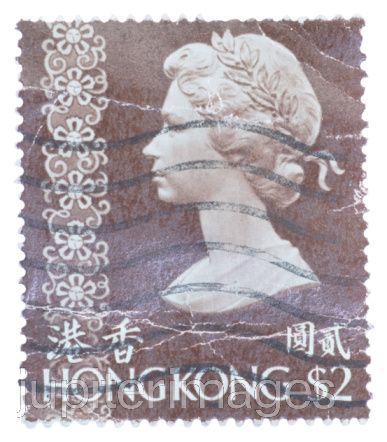
Stamp collecting is dying a slow painful death, or for all I know, already dead, as the world made a total shift from snail mail to electronic email. I do agree that the convenience of email is a million times more than the older system but oh, my mind so wistfully wanders to the days of snail mail and the joys of stamp collecting when I see the occasional envelope with the inevitable stamps pasted on it, a rarity these days.
The only way to expand your stamp collection these days is to subscribe to your postal service's philatelic bureau or buy them straight from a shop which may not be stamps in the true sense really, just some postal service of some exotic country trying to make some money by printing bits of paper and placing a careful seal on it.
I remember the first shot in the arm to my stamp collection when my uncle who was a store supervisor at the Matsusthita Electric (now called Panasonic Corporation), himself an avid stamp collector in his heydays, handed me all the stamps from his collection of a thousand, of which he had more than one copy. The store he worked at was an intermediary ware house of electronic goods from Japan from where they were shipped to all corners of the world mostly in South, South East and South West Asia. Naturally they had a lot of snail mail, and it was from these that he extracted the colourful bits of paper that reflected so much a country's culture and heritage not to speak of it's history and natural resources.
The next big boost came when I requested one of my uncles in the Sultanate of Oman who was a teacher at the governmental ministry of education, to send me some Omani stamps if he had any. Much to my joy, he went one step further and requested the students in his class to contribute any stamps they could get hold on, for his nephew. The oil boom in full swing, the students who were from all parts in the middle east from Syria to Lebanon, and from Pakistan to Qatar, diligently collected stamps and handed them over to my uncle.
My uncle took the pain to stuff all these in an envelope once in three months and posted them to me; and I had the additional bonus of getting hold of some really grand Omani stamps on the outer envelopes too.
Mind you, stamp collecting is not just tearing stamps off the cover and putting them in an album. For starters, let me explain. You first soak the stamp attached to the piece of envelope to which it is still stuck, in lukewarm water for about five minutes. By the time the gum loosens itself and the stamp comes loose. You need to dry the stamp by pressing them between two water absorbing paper sheets and apply light pressure on them at the same time.(This prevents the stamps from shrivelling as they dry). At the same time you need to make sure that the stamps that you have just peeled do not get stuck to the paper you have placed on which to dry, by shifting them to another paper pad in a reasonable time period. Since I didn't have access to blotting paper this task was the most challenging. And the golden rule: wash your hands with soap before handling stamps, they do have a tendency to attract a lot of dust, especially when wet.
I hope you now appreciate the effort that goes into building a decent stamp collection!
I have a particular grouse againt stamps from the USA, the problem being that the US postal systems use very strong adhesive and this causes the stamp to tear when you try to separate from the envelope. And since mutilated stamps lower the total value of your collection, I mostly discarded them.
And one more tip - if you wanted your stamp collection to increase manifold in a reasonable time, God's own land, Kerala, the land of expatriates was the place to be. Here almost every household had at least one or two bread winners working in some alien land; Indians being attached to their homeland, they frequently communicated with their family by air mail.
I remember, as a child of ten, going to random houses, asking puzzled householders whether they had any letters from abroad, with those precious bits of coloured paper stuck on them, that I could add to my collection.
Some grandmothers/ grandparents who were sometimes the only residents of the palatial expatriate houses , became suspicious of my request and wondering whether stamps were actually worth real money, started refusing to part with stamps, envelope and all!
I still have my treasured stamp collection, a bit less in number, countlessly pilfered by enthusiastic kids who visit our house after glancing through my collection, but all the same, more or less intact.